
Ciudad de México, 12 de octubre 2026
Key findings
Global
Gen Z emerges as the highest-spending generation of HNW collectors: In 2025 and the first half of 2026, Gen Z spent more on fine art than any other generation surveyed, with spending levels more than twice as high as those of older generations. Gen Z also made up nearly half of all collectors buying artworks priced above USD 1 million in 2026.
Family remains an important foundation for collecting: The survey offers the first dedicated analysis of how HNW collectors begin building their collections and finds that family is the most common route to starting a collection. While 28% of collectors reported family as their primary route into collecting, the share rose significantly to 40% among Gen Z. Almost 90% of Gen Z collectors who inherited works retained them, underscoring the enduring role of family legacy in shaping collections across generations.
Uniqueness and rarity stands out as the leading priority in owning art: Across generations, uniqueness and rarity ranked as the most important aspects of ownership (43%), ahead of owning works respected by experts (23%) or owning something admired in collector circles (22%). Uniqueness mattered more to Gen Z collectors (48% versus 38% of Baby Boomers).
Collectors have become strongly research-driven in their purchasing decisions: 72% of HNW collectors conducted moderate or significant independent research before purchasing art, up from 62% in 2025, and rising to 80% among Gen Z collectors.
Digital sources and AI-enabled research tools continue to gain ground: 58% of HNW collectors used online resources for advice and recommendations, while the use of apps and AI tools rose to 22%, up from 4% in 2024.
Collectors continue to diversify their interests across art and collectibles: Fine art accounted for 33% of total spending across art and collectibles categories in 2026. Gen Z collectors were the highest spenders across virtually every category and, together with boomers, displayed the broadest collecting interests, with 42% of Gen Z collectors and 39% of Baby Boomers purchasing across at least two additional collecting categories outside of fine and decorative art in the last year.
Philanthropy and legacy planning remain important priorities: The survey found that 23% of HNW collectors said they planned to donate works to museums in the coming year, while many others said they intended to support artist prizes, residencies, foundations, or private museums. Family legacy continues to play a central role in both building and preserving collections, with many collectors focused on passing collections to future generations.
Next Generation and Female Collectors
Family influence as what initially drew collectors to collect was particularly notable among Gen Z collectors, with almost 40% of Gen Z respondents citing family connections. Online channels were a less common route into collecting for Gen Z (10%) than for Gen X (16%), running against any assumption that younger collectors might be more likely to find their way to collecting through digital channels.
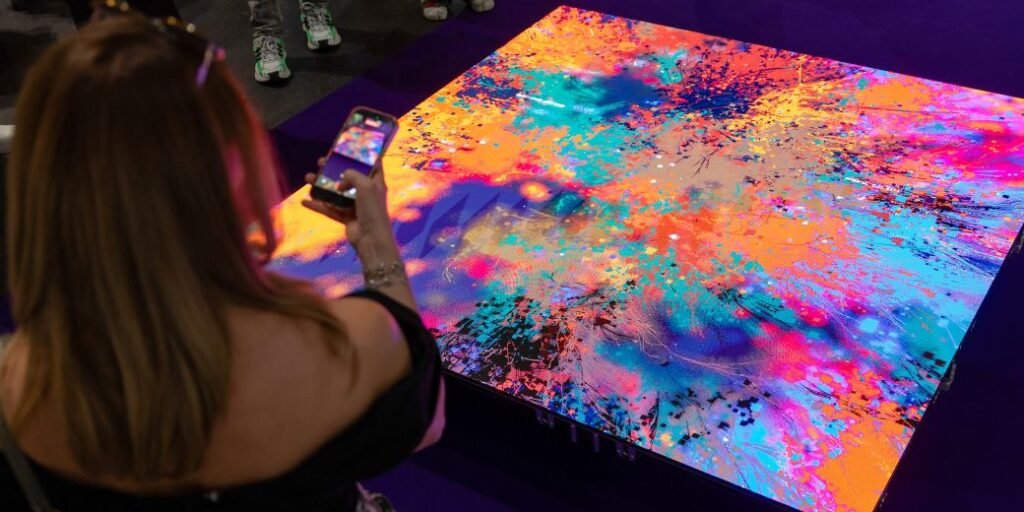
Paintings and sculptures were where Gen Z and millennials most often started. Digital art was most often a starting point for Gen Z: 7% named it as their very first purchase and 17% included it among their first three.
Gen Z collectors had by far the largest share of those spending over $1 million in the first half of 2026 (13%). Around 5% bought a work for more than $1 million in 2025 and the first half of 2026, versus 1% or less in all other age groups.
Gen Z collectors were more likely to have bought work by unfamiliar artists (56% versus 36% of boomers). As was the case in the 2025 survey, Gen Z respondents also stood out as the most active buyers in most collectible categories: 42% had purchased in at least two other collectibles segments and 24% in four or more categories.
Gen Z had the highest levels of spending across all segments. Fine and decorative art spending was double that of boomers, but their biggest leads were in collectible sectors such as jewelry and gems, sports memorabilia, wine, whisky and spirits, and luxury collectible sneakers, where their spending was three to five times that of the next-highest age cohort.
Women were slightly more likely than men to cite family as their main initial driver for collecting (31% versus 26%). Female collectors were also more likely to have inherited artworks (75% versus 70% of men) and to have kept them (78% versus 73%).
Participation rates were higher for female collectors across all fine art mediums, with women’s spending considerably more diversified than men. Some of the biggest margins were in photography, where female participation was 16% higher, and in prints and works on paper (both 14% higher). Women were more open to buying newly discovered artists than men (49% versus 43%).
Women were more likely to purchase at art fairs (69% versus 57%) in 2025/2026. Women were more likely to collect at least some digital art than men: 59% of female HNWIs had some digital art in their collections versus 51% of men. Women also tended to have a broader range of mediums within their collections: 30% of women collected across all of the eight mediums included in the survey, compared with 18% of men (and 23% overall).
Marco Salazar marco.salazar@llyc.global

Más historias
SOFÍA SEGOVIA ESTRENA EN AUDIBLE UNA NUEVA ADAPTACIÓN DE EL MURMULLO DE LAS ABEJAS, CON MÁS DE 70 VOCES
‘ENTRE TIERRAS’ DOCUMENTAL DE DE ATZIN ORTIZ GONZÁLEZ ESTRENA EN CINES ESTE 15 DE OCTUBRE 2026
LA XXXI FERIA NACIONAL DE LA CULTURA RURAL REUNIRÁ A COMUNIDAD DANZONERA MODERNA DEL CENTRO DEL PAÍS